Pages

Sunday, March 03, 2019

Who’s Afraid of Virginia Woolf (1965 Full Film)


Who’s Afraid of Virginia Woolf, a black and white drama movie released in 1965, directed by Mike Nichols, Ernest Lehman, writer, from Edward Albee's play. the film features four main actors, including two great actors who deliver a magnificent performance: Richard Burton (George, Professor of History) and Elizabeth Taylor (Martha, daughter of the university's dean). The other two actors were: George Segal (Nick, professor of biology) and his wife Sandy Dennis (Honey).

Martha and her husband George turn slightly drunk from a reception at the university where George is a Professor humming the rhyme "Who's Afraid of Virginia Woolf?" At the request of her father, Martha was forced to invite a young couple, recently moved, to join them for a drink. Just arrived, Nick and his wife, Honey, attend a memorable household scene of their hosts. Since they were drunk, the tone does not take long to rise. Martha et George, a couple in their fifties, come to unpack their grudges, without the least modesty, in front of their uncomfortable guests. As the evening progress, Nick and Honey become more drunk and embark on the games of George and Martha on the need to hurt themselves and hurt everyone, each couple has a secret. Nick and Honey end up gradually revealing the dark, pathetic and even shameful dimension of their own relationship. The ultimate abuse takes the form of a conversation with the invisible son of George and Martha, sixteen, whose birthday is the next day. After the departure of their guests, the film ends with the couple, Martha seated holding George’s hand who stands behind her, both look tired from this long evening.

The movie’s title does not say anything about what the audience should expect as a movie. The first scene, when George and Martha were walking coming from the reception, gives me the impression of a couple that was slightly drunk from a reception that they had fun. When Martha was insisting asking about who said that is a dump, I figured there was an issue in the couple, she was talking more than George and they were drinking none stop. She looks like she always has to have the last word. I was surprised to see how a married couple was hurting each other in front of strangers. In the beginning, the movie was not easy to follow, a woman who controls her husband, it was difficult to understand what is the real issue. The moral violence exerted between spouses, a heavy and suffocating atmosphere, pettiness and the cruelty of relations between the generations reach here their culminating point. The scenes leave the impression that the life of a couple comes down to permanent war. The talented actors, Martha and Georges, could sow doubt on the reality of their story. The audience believes in the scenes to realize at the end of the film that Marta’s and George's stories were fiction.

To conclude, this is a well-written film by Mike Nichols. Aside from the constant insults of the alcoholic couple, Martha and George who thirsts at the audience to ask what is next, I think that summarizes the story, a couple that has a lot of hates between them. In my opinion, the film a bit too long despite the ingenious performance of the actors.

Tuesday, February 19, 2019

The Battle for Brixton


April 1981: unprecedented violence erupts on south London streets, as thousands of local residents fight a pitched battle with the capital's police in a racially motivated conflict that would shock Thatcher's Britain to the core. Compelling first-hand accounts from rioters, looters, police officers and bystanders caught in the mêlée piece together 48 extraordinary hours that pushed tension in Brixton beyond bursting point. Director/Producer Helen Littleboy

Wednesday, February 13, 2019

The True Cost (2015)


This is a story about clothing. It’s about the clothes we wear, the people who make them, and the impact the industry is having on our world. The price of clothing has been decreasing for decades, while the human and environmental costs have grown dramatically. The True Cost is a groundbreaking documentary film that pulls back the curtain on the untold story and asks us to consider, who really pays the price for our clothing?

Filmed in countries all over the world, from the brightest runways to the darkest slums, and featuring interviews with the world’s leading influencers including Stella McCartney, Livia Firth and Vandana Shiva, The True Cost is an unprecedented project that invites us on an eye opening journey around the world and into the lives of the many people and places behind our clothes.

Friday, January 25, 2019

Head (1968)

Head is a 1968 American satirical musical adventure film written by Jack Nicholson and Bob Rafelson, directed by Rafelson, starring television rock group The Monkees (Davy Jones, Micky Dolenz, Peter Tork and Michael Nesmith), and distributed by Columbia Pictures.

During production, one of the working titles for the film was Changes, which was later the name of an unrelated album by The Monkees. Another working title was Untitled. A rough cut of the film was previewed for audiences in Los Angeles in the summer of 1968 under the name Movee Untitled.

In her scathing review, Renata Adler of The New York Times commented: Head "might be a film to see if you have been smoking grass, or if you like to scream at The Monkees, or if you are interested in what interests drifting heads and hysterical high-school girls."

Sunday, January 20, 2019

Brideshead Revisited - Et in Arcadia Ego


Episode One of the 1981 Granada Television series Brideshead Revisited. Evelyn Waugh said his novel was written at a time of great stress and deprivation, so it was a lot about longing and times of plenty, of baroque styles and rarified emotions. The TV series is a triumph of the medium. It is a sensual, passionate and sorrowful account of youth, emotions and the class world that was destroyed by the Second World War.

Brideshead Revisited is a 1981 British television serial starring Jeremy Irons and Anthony Andrews. It was produced by Granada Television for broadcast by the ITV network. Most of the serial was directed by Charles Sturridge; a few sequences were directed by Michael Lindsay-Hogg.

The serial is an adaptation of the novel Brideshead Revisited (1945) by Evelyn Waugh. It follows, from the 1920s to the early 1940s, the life and romances of the protagonist Charles Ryder—including his friendship with the Flytes, a family of wealthy English Catholics who live in a palatial mansion called Brideshead Castle.

The screenplay was written by Derek Granger (the film's producer) and others. Although the film credits attribute the screenplay to John Mortimer, Mortimer's script was not used.

The 11-episode serial premiered on ITV in the UK on 12 October 1981; on CBC Television in Canada on 19 October 1981; and as part of the Great Performances series on PBS in the United States on 18 January 1982.

In 2000, the serial was tenth on the list of the 100 Greatest British Television Programmes compiled by the British Film Institute, based on a poll of industry professionals.

Monday, January 07, 2019

Ten Canoes (2006)


Rolf de Heer’s curious mixture of entertainment and anthropology represented the first full-length Australian feature spoken entirely in Indigenous language. This version has English narration set over the Yolngu dialogue. A fusion of Yolngu and Western mythologies, set in Arnhem Land 120 years ago, the story tells a Yolngu tale before the first white contact.

Presenting a tale within a tale, this Australian film follows Dayindi (Jamie Gulpilil), a young Aboriginal warrior, as he wanders the wilderness hunting for eggs. Dayindi hears a story told by his brother Minygululu (Peter Minygululu), which echoes his own situation. A man who lusts after his brother's wife, the character in the tale kills a member of another tribe and faces dire consequences, with the story's ending reverberating in Dayindi's own life.

Friday, January 04, 2019

Burroughs: The Movie by Howard Brookner (1983)


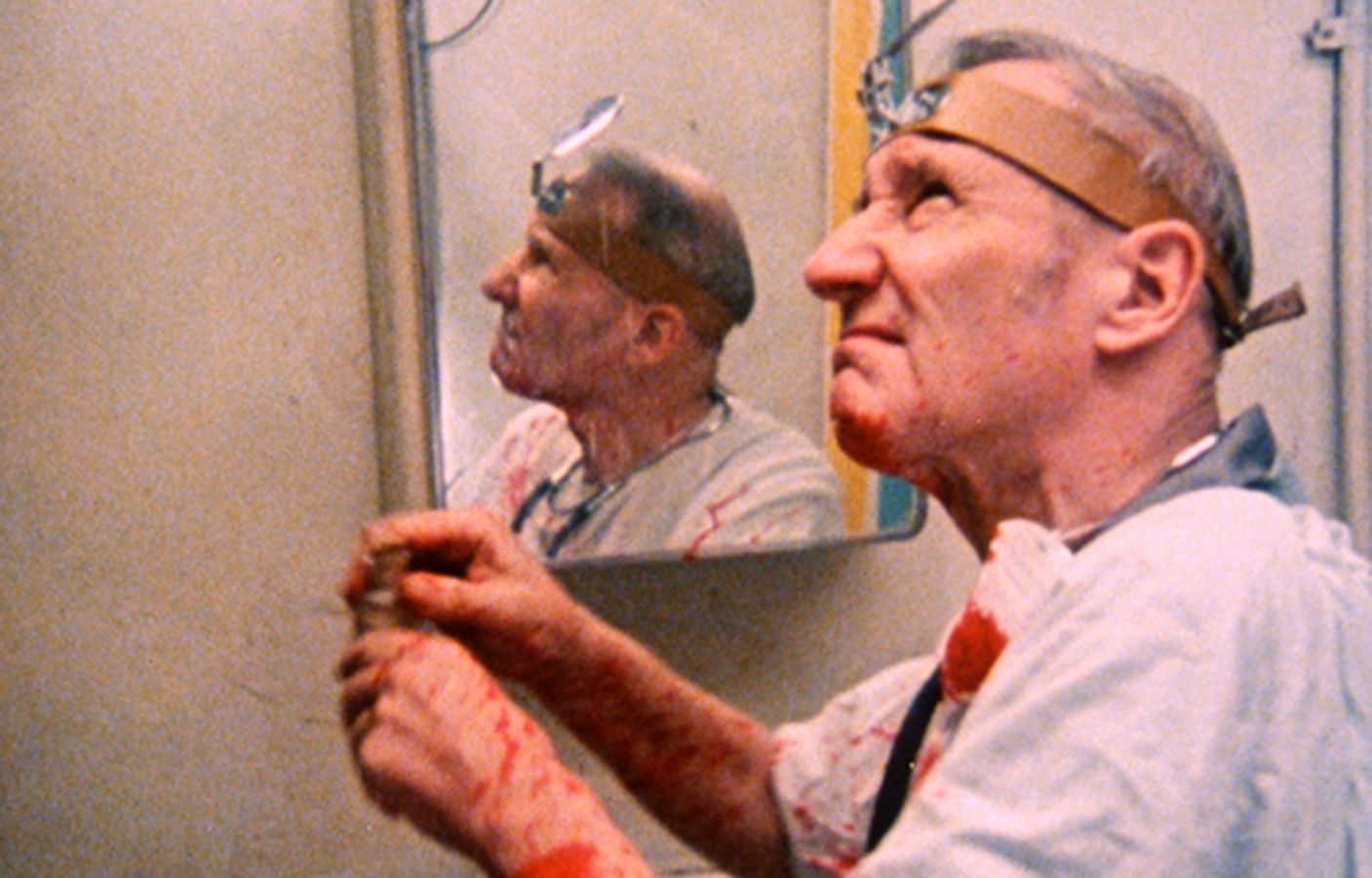
Made up of intimate, revelatory footage of the singular author and poet filmed over the course of five years, Howard Brookner’s 1983 documentary about William S. Burroughs was for decades mainly the stuff of legend; that changed when Aaron Brookner, the late director’s nephew, discovered a print of it in 2011 and spearheaded a restoration. Now viewers can enjoy the invigorating candidness of Burroughs: The Movie, a one-of-a-kind nonfiction portrait that was brought to life with the help of a remarkable crew of friends, including Jim Jarmusch and Tom DiCillo, and that features on-screen appearances by fellow artists of Burroughs’s including Allen Ginsberg, Herbert Huncke, Patti Smith, and Terry Southern. Click on Bill and Allen above for the entire film.

28657id_475.jpg
28657id_476.jpg
28657id_478_primary.jpg
28657id_480.jpg
28657id_487.jpg
28657id_489.jpg

Monday, December 31, 2018

Kashmir the story full documentary (The history of Kashmir) : India, Pakistan and China


The history of Kashmir is intertwined with the history of the broader Indian subcontinent and the surrounding regions, comprising the areas of Central Asia, South Asia and East Asia. Historically, Kashmir referred to the Kashmir Valley.Today, it denotes a larger area that includes the Indian-administered state of Jammu and Kashmir (which consists of Jammu, the Kashmir Valley, and Ladakh), the Pakistan-administered territories of Azad Kashmir and Gilgit–Baltistan, and the Chinese-administered regions of Aksai Chinand the Trans-Karakoram Tract.

In the first half of the 1st millennium, the Kashmir region became an important centre of Hinduism and later of Buddhism; later in the ninth century, Shaivism arose. Islamization in Kashmir took place during 13th to 15th century and led to the eventual decline of the Kashmir Shaivism in Kashmir. However, the achievements of the previous civilizations were not lost.

In 1339, Shah Mir became the first Muslim ruler of Kashmir, inaugurating the Shah Mir Dynasty. For the next five centuries, Muslim monarchs ruled Kashmir, including the Mughal Empire, who ruled from 1586 until 1751, and the Afghan Durrani Empire, which ruled from 1747 until 1819. That year, the Sikhs, under Ranjit Singh, annexed Kashmir. In 1846, after the Sikh defeat in the First Anglo-Sikh War, and upon the purchase of the region from the British under the Treaty of Amritsar, the Raja of Jammu, Gulab Singh, became the new ruler of Kashmir. The rule of his descendants, under the paramountcy (or tutelage) of the British Crown, lasted until 1947, when the former princely state became a disputed territory, now administered by three countries: India, Pakistan, and the People's Republic of China.

Kashmir the story is a documentary which gives an insight into the conflict-ridden region, showcasing facts as they are. The purely observational piece of storytelling is an honest attempt to showcase life in the valley.

Saturday, December 29, 2018

Fallen Angels (1995) Wong Kar-Wai


Fallen Angels is the story of a professional killer in Hong Kong. It follows the in's and out's of his job and his partner in crime who he rarely sees. After 3 years of working together he wants out. Another sub-plot is about a mute (caused by eating expired cans of pineapples for a month, after he was heart broken) who breaks into restaurants, cafés and ice-cream trucks at night and forces people to buy his goods!

Fallen Angels was originally intended as the 3rd part of Chungking Express before it ended up being too long, great as a double feature!

Sunday, December 23, 2018

Tuning In- Karlheinz Stockhausen (Maconie, 1981)


The documentary Tuning In was produced by Barrie Gavin for the BBC “Horizon” series in considerably modified form from an initial proposal authored by Robin Maconie which was based entirely on prefilmed lecture material produced by Stockhausen’s London agent Robert Slotover (Allied Artists).