April 1981: unprecedented violence erupts on south London streets, as thousands of local residents fight a pitched battle with the capital's police in a racially motivated conflict that would shock Thatcher's Britain to the core. Compelling first-hand accounts from rioters, looters, police officers and bystanders caught in the mêlée piece together 48 extraordinary hours that pushed tension in Brixton beyond bursting point. Director/Producer Helen Littleboy
Tuesday, February 19, 2019
The Battle for Brixton
April 1981: unprecedented violence erupts on south London streets, as thousands of local residents fight a pitched battle with the capital's police in a racially motivated conflict that would shock Thatcher's Britain to the core. Compelling first-hand accounts from rioters, looters, police officers and bystanders caught in the mêlée piece together 48 extraordinary hours that pushed tension in Brixton beyond bursting point. Director/Producer Helen Littleboy

Wednesday, February 13, 2019
The True Cost (2015)
This is a story about clothing. It’s about the clothes we wear, the people who make them, and the impact the industry is having on our world. The price of clothing has been decreasing for decades, while the human and environmental costs have grown dramatically. The True Cost is a groundbreaking documentary film that pulls back the curtain on the untold story and asks us to consider, who really pays the price for our clothing?
Filmed in countries all over the world, from the brightest runways to the darkest slums, and featuring interviews with the world’s leading influencers including Stella McCartney, Livia Firth and Vandana Shiva, The True Cost is an unprecedented project that invites us on an eye opening journey around the world and into the lives of the many people and places behind our clothes.
Friday, January 25, 2019
Head (1968)
During production, one of the working titles for the film was Changes, which was later the name of an unrelated album by The Monkees. Another working title was Untitled. A rough cut of the film was previewed for audiences in Los Angeles in the summer of 1968 under the name Movee Untitled.
In her scathing review, Renata Adler of The New York Times commented: Head "might be a film to see if you have been smoking grass, or if you like to scream at The Monkees, or if you are interested in what interests drifting heads and hysterical high-school girls."
Sunday, January 20, 2019
Brideshead Revisited - Et in Arcadia Ego
Episode One of the 1981 Granada Television series Brideshead Revisited. Evelyn Waugh said his novel was written at a time of great stress and deprivation, so it was a lot about longing and times of plenty, of baroque styles and rarified emotions. The TV series is a triumph of the medium. It is a sensual, passionate and sorrowful account of youth, emotions and the class world that was destroyed by the Second World War.
Brideshead Revisited is a 1981 British television serial starring Jeremy Irons and Anthony Andrews. It was produced by Granada Television for broadcast by the ITV network. Most of the serial was directed by Charles Sturridge; a few sequences were directed by Michael Lindsay-Hogg.
The serial is an adaptation of the novel Brideshead Revisited (1945) by Evelyn Waugh. It follows, from the 1920s to the early 1940s, the life and romances of the protagonist Charles Ryder—including his friendship with the Flytes, a family of wealthy English Catholics who live in a palatial mansion called Brideshead Castle.
The screenplay was written by Derek Granger (the film's producer) and others. Although the film credits attribute the screenplay to John Mortimer, Mortimer's script was not used.
The 11-episode serial premiered on ITV in the UK on 12 October 1981; on CBC Television in Canada on 19 October 1981; and as part of the Great Performances series on PBS in the United States on 18 January 1982.
In 2000, the serial was tenth on the list of the 100 Greatest British Television Programmes compiled by the British Film Institute, based on a poll of industry professionals.
Monday, January 07, 2019
Ten Canoes (2006)
Rolf de Heer’s curious mixture of entertainment and anthropology represented the first full-length Australian feature spoken entirely in Indigenous language. This version has English narration set over the Yolngu dialogue. A fusion of Yolngu and Western mythologies, set in Arnhem Land 120 years ago, the story tells a Yolngu tale before the first white contact.
Presenting a tale within a tale, this Australian film follows Dayindi (Jamie Gulpilil), a young Aboriginal warrior, as he wanders the wilderness hunting for eggs. Dayindi hears a story told by his brother Minygululu (Peter Minygululu), which echoes his own situation. A man who lusts after his brother's wife, the character in the tale kills a member of another tribe and faces dire consequences, with the story's ending reverberating in Dayindi's own life.
Friday, January 04, 2019
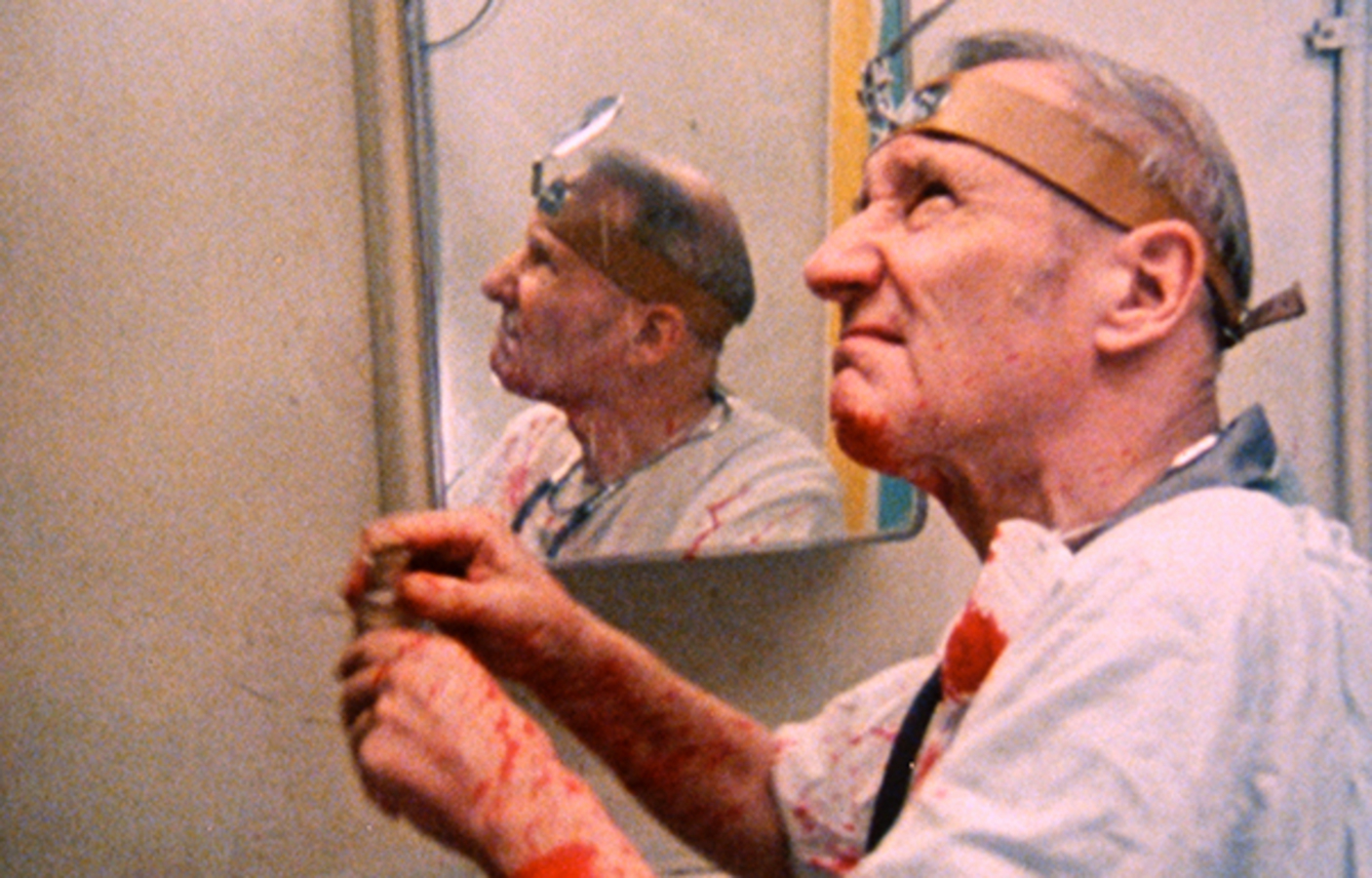
Burroughs: The Movie by Howard Brookner (1983)

Made up of intimate, revelatory footage of the singular author and poet filmed over the course of five years, Howard Brookner’s 1983 documentary about William S. Burroughs was for decades mainly the stuff of legend; that changed when Aaron Brookner, the late director’s nephew, discovered a print of it in 2011 and spearheaded a restoration. Now viewers can enjoy the invigorating candidness of Burroughs: The Movie, a one-of-a-kind nonfiction portrait that was brought to life with the help of a remarkable crew of friends, including Jim Jarmusch and Tom DiCillo, and that features on-screen appearances by fellow artists of Burroughs’s including Allen Ginsberg, Herbert Huncke, Patti Smith, and Terry Southern. Click on Bill and Allen above for the entire film.



Monday, December 31, 2018
Kashmir the story full documentary (The history of Kashmir) : India, Pakistan and China
The history of Kashmir is intertwined with the history of the broader Indian subcontinent and the surrounding regions, comprising the areas of Central Asia, South Asia and East Asia. Historically, Kashmir referred to the Kashmir Valley.Today, it denotes a larger area that includes the Indian-administered state of Jammu and Kashmir (which consists of Jammu, the Kashmir Valley, and Ladakh), the Pakistan-administered territories of Azad Kashmir and Gilgit–Baltistan, and the Chinese-administered regions of Aksai Chinand the Trans-Karakoram Tract.
In the first half of the 1st millennium, the Kashmir region became an important centre of Hinduism and later of Buddhism; later in the ninth century, Shaivism arose. Islamization in Kashmir took place during 13th to 15th century and led to the eventual decline of the Kashmir Shaivism in Kashmir. However, the achievements of the previous civilizations were not lost.
In 1339, Shah Mir became the first Muslim ruler of Kashmir, inaugurating the Shah Mir Dynasty. For the next five centuries, Muslim monarchs ruled Kashmir, including the Mughal Empire, who ruled from 1586 until 1751, and the Afghan Durrani Empire, which ruled from 1747 until 1819. That year, the Sikhs, under Ranjit Singh, annexed Kashmir. In 1846, after the Sikh defeat in the First Anglo-Sikh War, and upon the purchase of the region from the British under the Treaty of Amritsar, the Raja of Jammu, Gulab Singh, became the new ruler of Kashmir. The rule of his descendants, under the paramountcy (or tutelage) of the British Crown, lasted until 1947, when the former princely state became a disputed territory, now administered by three countries: India, Pakistan, and the People's Republic of China.
Kashmir the story is a documentary which gives an insight into the conflict-ridden region, showcasing facts as they are. The purely observational piece of storytelling is an honest attempt to showcase life in the valley.
Saturday, December 29, 2018
Fallen Angels (1995) Wong Kar-Wai
Fallen Angels is the story of a professional killer in Hong Kong. It follows the in's and out's of his job and his partner in crime who he rarely sees. After 3 years of working together he wants out. Another sub-plot is about a mute (caused by eating expired cans of pineapples for a month, after he was heart broken) who breaks into restaurants, cafés and ice-cream trucks at night and forces people to buy his goods!
Fallen Angels was originally intended as the 3rd part of Chungking Express before it ended up being too long, great as a double feature!
Sunday, December 23, 2018
Tuning In- Karlheinz Stockhausen (Maconie, 1981)
The documentary Tuning In was produced by Barrie Gavin for the BBC “Horizon” series in considerably modified form from an initial proposal authored by Robin Maconie which was based entirely on prefilmed lecture material produced by Stockhausen’s London agent Robert Slotover (Allied Artists).
Saturday, December 22, 2018
The Oblivion Seeker - Isabelle Eberhardt
Civilization, that great fraud of our times, has promised man that by complicating his existence it would multiply his pleasures. ... Civilization has promised man freedom, at the cost of giving up everything dear to him, which it arrogantly treated as lies and fantasies. ... Hour by hour needs increase and are nearly always unsatisfied, peopling the earth with discontented rebels. The superfluous has become a necessity and luxuries indispensable. - Isabelle Eberhardt
Actress Juliet Stevenson retraces the journeys of turn-of-the-century traveler and writer Isabelle Eberhardt. BBC, 1994.
Isabelle Wilhelmine Marie Eberhardt (17 February 1877 – 21 October 1904) was a Swiss explorer and author. As a teenager, Eberhardt, educated in Switzerland by her father, published short stories under a male pseudonym. She became interested in North Africa, and was considered a proficient writer on the subject despite learning about the region only through correspondence. After an invitation from photographer Louis David, Eberhardt moved to Algeria in May 1897. She dressed as a man and converted to Islam, eventually adopting the name Si Mahmoud Saadi. Eberhardt's unorthodox behaviour made her an outcast among European settlers in Algeria and the French administration.
Eberhardt's acceptance by the Qadiriyya, an Islamic order, convinced the French administration that she was a spy or an agitator. She survived an assassination attempt shortly thereafter. In 1901, the French administration ordered her to leave Algeria, but she was allowed to return the following year after marrying her partner, the Algerian soldier Slimane Ehnni. Following her return, Eberhardt wrote for a newspaper published by Victor Barrucand and worked for General Hubert Lyautey. In 1904, at the age of 27, she was killed by a flash flood in Aïn Séfra.

Isabelle was a journalist and war correspondent. Her disguise helped her to penetrate the peoples of the Sahara to get to know their customs. In Aïn Sefra she met Lyautey, a general charged with the task of reestablishing order on the border between Algeria and Morocco. With him, Isabelle was able to enter the camps and observe the conflicts first-hand. Not only did she disguise herself as a man, she also observed military discipline and was treated the same way as the other soldiers. In 1904 Isabelle she met up with her husband in Aïn Sefra and in a flash flood their clay house collapsed on top of them. “I know that this way of life is dangerous, but the moment of danger is also the moment of hope,” she wrote. She published many articles during her lifetime, and after her death her diaries and fiction were published.

Yasmina et Autres Nouvelles by Isabelle Eberhardt translated by Ahcene Douas
Isabelle Eberhardt: Portrait of the Artist as a Young Nomad by HEDI ABDEL-JAOUAD
Feminize Your Canon: Isabelle Eberhardt at The Paris Review
Subscribe to:
Posts (Atom)